


Barge Transport & Transshipment of Industrial Boilers
Updated: Jul 30
Project Specifications & Cargo Dimensions
The project involved the movement of high-tonnage, oversized industrial components requiring specialized heavy-lift planning:
Cargo Item: 3x Identical Industrial Boilers
Weight per Unit: 364 tons (Total weight: 1,092 tons)
Dimensions per Unit: Length: 16.00 m | Width: 11.00 m | Height: 11.00 m
Transport Route: Drobeta-Turnu Severin (Danube River) to Constanta Port (Black Sea)
Final Destination: Doha, Qatar

Critical Challenges & Engineering Solutions
Low-Water Level Management on the Danube
During the mobilization phase, water depth at the loading point in Drobeta-Turnu Severin dropped to 0.5 meters. Operating heavy transport vessels under these draft restrictions poses severe grounding risks.
The engineering team calculated precise weight distribution parameters and selected a specialized barge configuration capable of maintaining stability and adequate clearance. This allowed the 364-ton units to be safely rolled or lifted onto the vessel despite the critical water levels.

Short-Notice Fleet Mobilization
Project requirements demanded rapid asset deployment. Eastship secured the appropriate barge tonnage and heavy-lift rigging equipment within a compressed timeframe, preventing delays in the shipper's global supply chain.
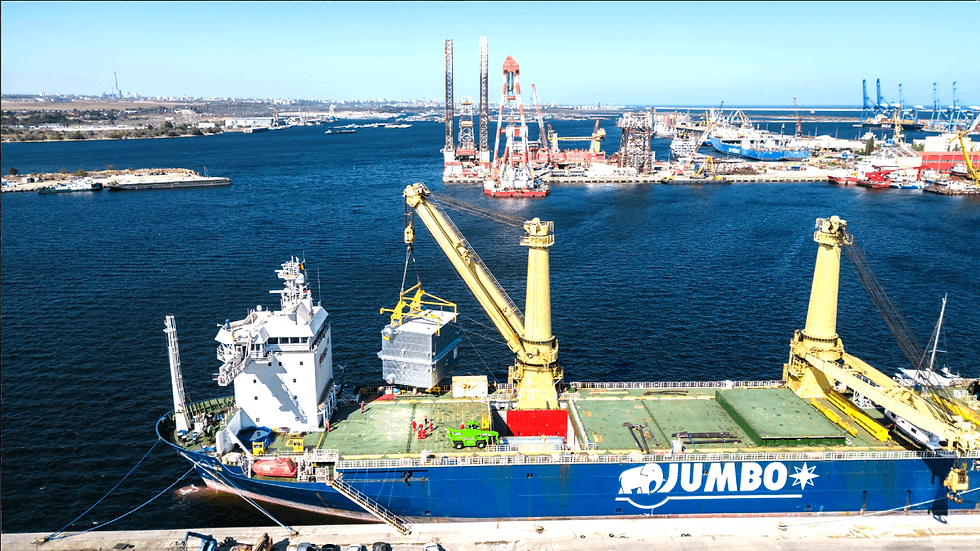
Port Transhipment (Barge-to-Ship)
Upon arrival at the Port of Constanta, the operations team coordinated the direct transhipment from the river barge onto an ocean-going vessel. This direct transfer minimized cargo handling, reduced the risk of structural stress on the boilers, and optimized port stay efficiency before the final maritime transit to Qatar.
Process Breakdown
Pre-Carriage Engineering: Draft calculations, mooring plans, and load-out sequencing.
Inland Waterway Transit: Navigation through shallow Danube sections using optimized ballast configurations.
Port Logistics: Direct vessel-to-vessel transfer under strict safety protocols to support project timelines.


Comments